The right to nationality in Mozambique: The application of ‘Jus soli’ in the fight against statelessness
‘Jus soli’ gives anyone born on Mozambican soil effective citizenship and the rights associated with itOriginally published on Global VoicesProtesters in Nairobi hold a demonstration calling on the state to offer Makonde people Kenyan citizenship. Screenshot from YouTube documentary ‘The Journey of the Makonde to Citizenship.’ This essay was written…
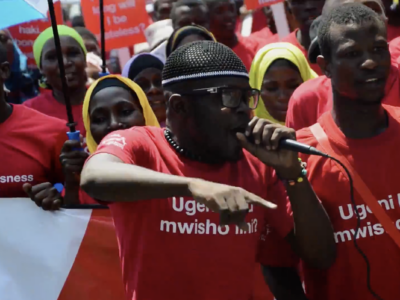
‘Jus soli’ gives anyone born on Mozambican soil effective citizenship and the rights associated with it
Originally published on Global Voices

Protesters in Nairobi hold a demonstration calling on the state to offer Makonde people Kenyan citizenship. Screenshot from YouTube documentary ‘The Journey of the Makonde to Citizenship.’
This essay was written by Kamaro Christian courtesy of The Global Movement Against Statelessness (GMAS), a content partner of Global Voices. This post is part of Global Voices’ July 2026 Spotlight series, “Statelessness.” This series offers insight into the issue of statelessness and how it hinders people’s freedom of movement, educational opportunities, political access, and more. You can support this coverage by donating here.
Imagine being born, raised, and enmeshed in a country, speaking its languages and sharing its culture, yet remaining completely invisible to its laws and rights. The Makonde community, who migrated from Mozambique, lived in this precise legal vacuum in Kenya, completely trapped in a bureaucratic limbo until they were finally recognized as citizens. About 6,000 ethnic Makondes became Kenyan citizens in 2016.

A Mokonde woman expresses her joy at finally obtaining Kenyan citizenship. Screenshot from YouTube documentary ‘The Journey of the Makonde to Citizenship.’
The Makonde are a Bantu-speaking community who live on both sides of the River Ruvuma, which forms the border of Tanzania and Mozambique. The community originated from the northern part of the Republic of Mozambique, mainly from the Mueda district of Cabo Delgado province. A small group of Makonde migrated to Kenya as early as 1948 and have remained ever since. The Kenyan Makonde consist of descendants of exiled freedom fighters, refugees fleeing civil war, and laborers recruited by the British during the colonial period to work on sisal farms and sugar plantations across Kenya’s coastal counties of Kwale, Kilifi, and Taita Taveta.
This historic exclusion is not an isolated anomaly; it represents a devastating global phenomenon known as statelessness. According to international law, a stateless person is someone who is not considered a national by any state under the operation of its law. Without a legal identity, an individual is stripped of basic human rights, barred from formal education, blocked from healthcare, denied basic state services and rights, and left exposed to severe institutional exploitation. In an era marked by shifting borders and forced human displacement, the criteria a sovereign state uses to grant nationality cease to be a mere administrative formality; they become a fundamental matter of human survival, dignity, and social justice.
To comply with modern international human rights standards, Mozambique could decisively strengthen and enforce the principle of jus soli, as consecrated in Article 24 of its Constitution. This gives anyone born on Mozambican soil effective citizenship and the rights and freedoms that come with it. Broadening and actively implementing this territorial framework is the most effective legal safeguard to eliminate generational statelessness, ensure immediate state protection for vulnerable children born within the territory, and uphold human dignity.
The necessity of a robust territorial framework becomes clear when analyzing the legal realities of cross-border migration within Mozambique.
Currently, the country operates a mixed legal model. Article 24 of the Constitution establishes that individuals born in the national territory after independence are citizens. This territorial connection provides an essential legal lifeline. According to the United Nations High Commissioner for Refugees (UNHCR), there were 4.4 million stateless individuals worldwide by the end of 2024, many of whom are entirely undocumented and administratively excluded.

Cabo Delgado, Mozambique. Image from Wikimedia Commons. (CC BY-SA 3.0).

Furthermore, the ongoing armed conflict in Cabo Delgado, the northernmost province in Mozambique, has caused a massive loss of identity documents, creating a high risk of de facto statelessness among internally displaced persons. The most vulnerable victims are the children of refugees and asylum seekers.
When parents flee active warfare without documentation, their children cannot inherit a nationality through bloodlines. By fully applying jus soli, the Mozambican state steps in to break this cycle of hereditary invisibility, guaranteeing that the mere fact of being born on its soil automatically grants secure legal status, access to public education, and basic healthcare.
There may be conservatives who argue that expanding jus soli could compromise national sovereignty, strain state resources, or dilute the nation's cultural fabric. They may contend that jus sanguinis, a nationality principle that asserts one can only gain citizenship if one or both parents are citizens, remains necessary to protect national identity and ensure that citizenship is reserved only for those with genuine, generational ties to the population. Furthermore, the Constitution itself introduces technical exceptions, such as Article 24, paragraph 2, which excludes children born to foreign parents who are in the country under official state service.
However, these sovereignty concerns do not match international legal realities or practical state interests.
Restricting citizenship through rigid ancestral bloodlines does not stop migration; it merely forces generations of residents into permanent, unauthorized legal margins. This exclusion creates severe social fragmentation and forms disenfranchised juridical enclaves within domestic borders. Legally integrated individuals, by contrast, contribute productively to economic development and foster long-term social harmony. Therefore, a well-regulated territorial path to citizenship does not weaken state sovereignty; it strengthens the state by turning marginalized populations into active, law-abiding stakeholders.
Therefore, the effective implementation of jus soli under Article 24 of the Constitution is an irreplaceable tool for justice and human rights in Mozambique. It serves as a necessary legal mechanism that transforms national soil from a rigid geographic border into a space of safety, inclusion, and definitive legal security. However, written constitutional text is not enough.
To completely eradicate statelessness, the Mozambican government could modernize its administrative practices and ensure agile, accessible, and decentralized civil registration procedures across all local registries. Protecting and documenting every individual born within its jurisdiction is a profound affirmation of Mozambique’s sovereign identity and a testament to its unyielding commitment to universal human dignity.
This article originally appeared on Global Voices and is republished under a Creative Commons licence. Read the original article.
Related stories
 World
World‘West Indian by conviction’: The Caribbean says farewell to poet and author Ian McDonald
‘May his soul find the peace that his words so abundantly gave’Originally published on Global VoicesPoet and author Ian McDonald at the 2013 Bocas Lit Fest in Port of Spain, Trinidad. Photo courtesy the Bocas Lit Fest, used with permission. Ian McDonald was the consummate writer. Sure, he was naturally…
 World
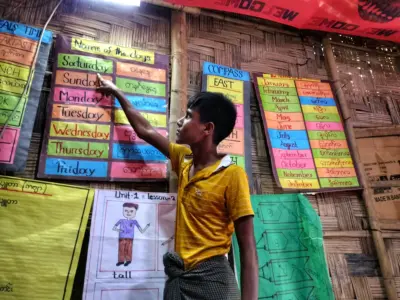
WorldThe lost generation: The unfinished education of Rohingya youth in Bangladeshi refugee camps
In Bangladesh’s Cox’s Bazar refugee camp, many children and young people cannot access continuous, quality educationOriginally published on Global VoicesA student in a learning center in Cox's Bazar, Bangladesh. Photo by Mohammed Zubair. Used with permission. This essay was written by Mohammed Zubair and Abul Osman, courtesy of The Global…
 World
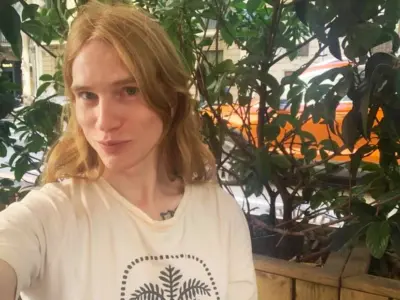
WorldRunning from Russia, running from hate: A trans girl’s flight to survival
‘I realized I could no longer stay in Russia because it wasn’t safe’Originally published on Global VoicesIsabelle. Image courtesy of author. This post is part of Global Voices’ July 2026 Spotlight series, “Statelessness.” This series offers insight into the issue of statelessness and how it hinders people’s freedom of movement,…