Rescuing satellites is harder than it looks – a growing space junk problem will make doing so more important
An illustration of the plan for the European Space Agency's ClearSpace mission, where a servicing spacecraft will deorbit an ESA satellite. ClearSpace/ESA, CC BY-NCA commercial robotic spacecraft called LINK launched on an emergency mission to save NASA’s Neil Gehrels Swift Observatory, which has been slowly falling toward Earth, on July…
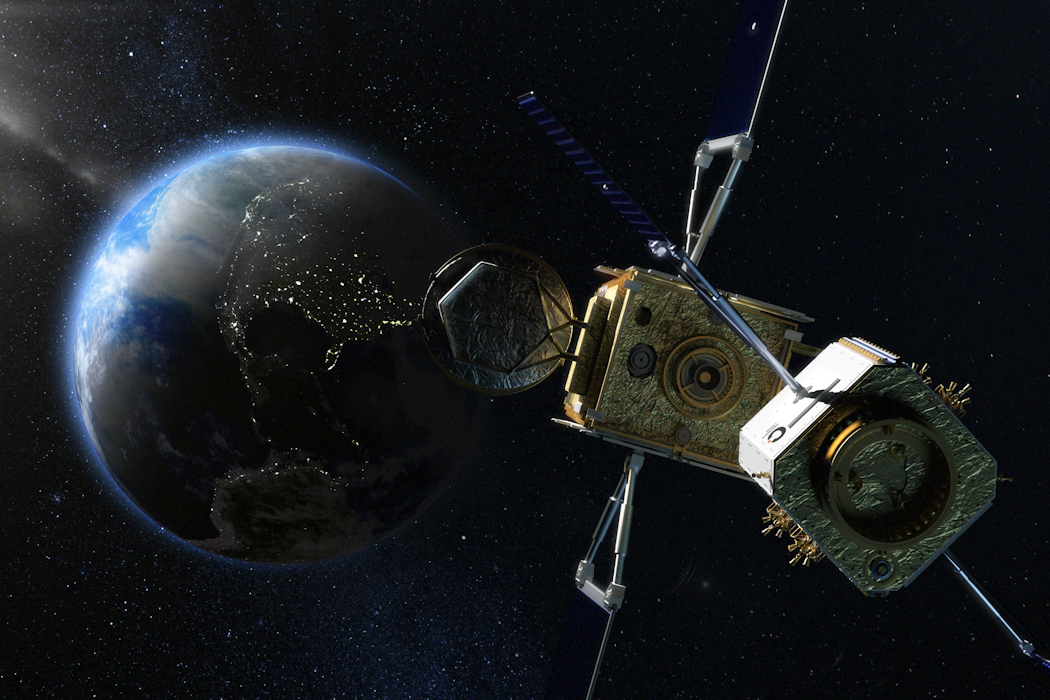
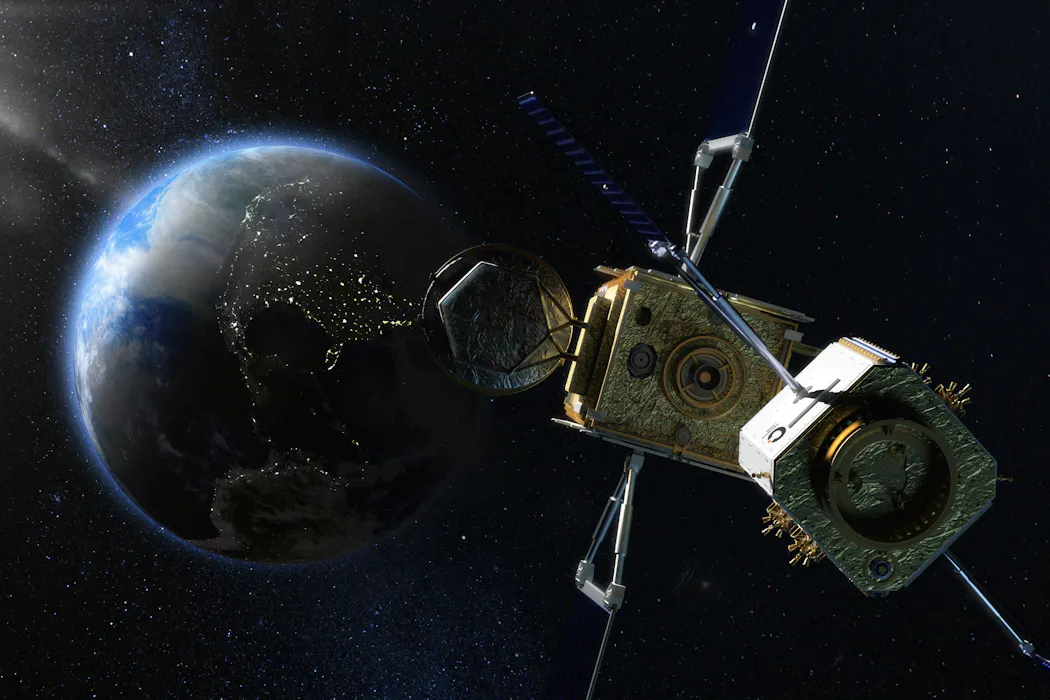
A commercial robotic spacecraft called LINK launched on an emergency mission to save NASA’s Neil Gehrels Swift Observatory, which has been slowly falling toward Earth, on July 3, 2026. Over the coming weeks, LINK, built by Katalyst Space Technologies, will try to grasp the telescope, then spend months raising it to a safer orbit.
For most of the space age, satellites have been disposable: moved aside or replaced when they ran low on fuel or failed. That wasn’t much of an issue decades ago, when orbit was far less crowded. Now, space surveillance networks track tens of thousands of human-made objects, and the European Space Agency estimates that more than 1.2 million pieces of satellite and spacecraft debris larger than half an inch (1 centimeter) are in orbit. Even chunks that small are large enough to cause severe damage in a collision.
You might say “just clean up the junk” because space debris looks motionless in photographs. But as a Ph.D. candidate researching satellite servicing, I know that the hardest part of removing a dead satellite before it breaks apart into new debris is not reaching it – it is understanding how it moves, how to approach without hitting it, and controlling the instant that two free-flying objects touch.
A tow hook changes the problem
So, how do you catch a dead or broken satellite? The spacecraft doing the catching is a servicer: a robotic mechanic that flies up to refuel, repair or move a disabled satellite.
Some satellites, called prepared satellites, are easier to catch. They carry a built-in feature that works like a car’s tow hook. The servicer knows where to attach, what loads the hook can bear and what its cameras can use as landmarks. That feature removes several unknowns at once.
Many older, unprepared satellites have no docking plate, beacon or navigation marker. Some can still be serviced by gripping a strong structural feature. Northrop Grumman’s Mission Extension Vehicles, for example, have docked onto communications satellites and taken over their propulsion and pointing.
To grab the satellite, engineers first identify a safe attachment point and estimate the object’s shape, mass and motion, often while working off incomplete information. But even if they find a potential attachment point, this strategy may not work. A solar panel, antenna or insulation blanket may not be strong enough to carry the load from the servicer.

Wanjiku Chebet Kanjumba, CC BY-NC-ND
The target does not hold still
Even if a satellite is prepared with some sort of tow hook, capturing it is still extremely difficult.
A dead or disabled satellite is not parked in space. It keeps orbiting Earth and may spin or tumble because it can no longer control its orientation or reorient itself to face the servicer.
Imagine fitting a key into a lock while the lock, or even the door, keeps rotating, your hands float freely and a hard touch sends everything spinning. Reaching the lock is only half the task. Matching its motion closely enough for controlled contact is the rest of the challenge.
Swift is an example of an unprepared satellite. It was not built with any standardized fixture that a repair craft can latch onto. Without one, there is no obvious place to grab and no guarantee it survives capture. LINK’s mission is a vivid case of what engineers call noncooperative capture: catching a spacecraft that cannot help the servicer, may be tumbling unpredictably and was never built to be caught.
To catch a tumbling satellite, the servicer has to estimate several things at once: where the target is, how fast it is moving, which way it is facing and how that orientation is changing. Cameras and laser-ranging sensors on the servicer offer clues, and data from those readings can provide an estimate of how the satellite is moving before the servicer edges close enough to touch.
When the servicer’s robotic arm touches a tumbling satellite, the force from that contact pushes the servicer back. The arm acts like a long lever, so even a gentle nudge at its tip can throw it off course. A rigid grab lands a sharp, jarring impact; a softer, shock-absorbing one keeps the satellite from bouncing away.
The servicer will have an onboard control system, which flies the spacecraft and keeps its body back at a safe distance while the arm reaches in. If the satellite starts moving in an unexpected way, the servicer’s control system helps it retreat. Researchers study how to coordinate the servicer spacecraft’s body, thrusters and arm so that contact becomes a controlled transfer of momentum, not an accidental collision.
In my doctoral research in aerospace engineering at the University of Florida, I study how to approach defunct satellites in a controlled way. My broader research looks at how a single framework can handle both cooperative satellites, built to be caught, and noncooperative ones – the dead or tumbling craft that can’t help their rescuers.

Wanjiku Chebet Kanjumba, CC BY-NC-ND
Designing for rescue changes the equation
Designing a satellite with a standardized fixture to grab onto and navigation markers to help the servicer line up can cut down on uncertainty. But these features can’t totally replace precise navigation. A servicing craft still needs to move nimbly through orbit. Knowing where the capture point is gives the servicer’s cameras a clear reference and a predictable place to connect, and lets engineers trust that the satellite’s structure will survive capture.
ELSA-M and ClearSpace-1 show two complementary paths. Astroscale’s ELSA-M will capture commercial satellites fitted with a magnetic docking plate before launch (targets built to be serviced). The European Space Agency’s ClearSpace-1, planned for 2029, tackles the harder case by capturing the unprepared, noncooperative Proba-1 satellite and dragging it down to burn up.
Servicers usually stay in orbit instead of coming home. Some, like the Mission Extension Vehicles, park the satellite they have been helping in a high “graveyard” orbit, clear of working spacecraft, then undock and move on; others ride down with their target and burn up when they reach Earth’s atmosphere.

Wanjiku Chebet Kanjumba, CC BY-NC-ND
The next few years will show whether the space industry really leaves disposable satellites behind and starts building them to be caught and repaired, or simply gets neater about throwing them away, designing them to burn up on the way down.
Wanjiku Chebet Kanjumba is the co-founder and CEO of Vicillion Inc., an early stage aerospace company focused on commercial spaceflight and spaceport interoperability. She is affiliated with organizations including the Global Spaceport Alliance, the Space Generation Advisory Council, and Women in Space. She has no funding from or financial relationship with any satellite servicing or debris removal companies named in the article.
This article is republished from The Conversation under a Creative Commons licence. Read the original article.
Related stories
 Technology
New York Times–OpenAI Copyright Fight Escalates Over Chat Logs
A closely watched legal battle over how AI systems use journalism intensified as a court process brought millions of de-identified chat records into view.
 Technology
Meta Unveils “Muse Image,” an In-House AI Image Generator
The social-media giant entered the crowded text-to-image race with a new model that quickly climbed a popular public leaderboard.